
Rifle Ranges: 100, 200 and 300 Yards
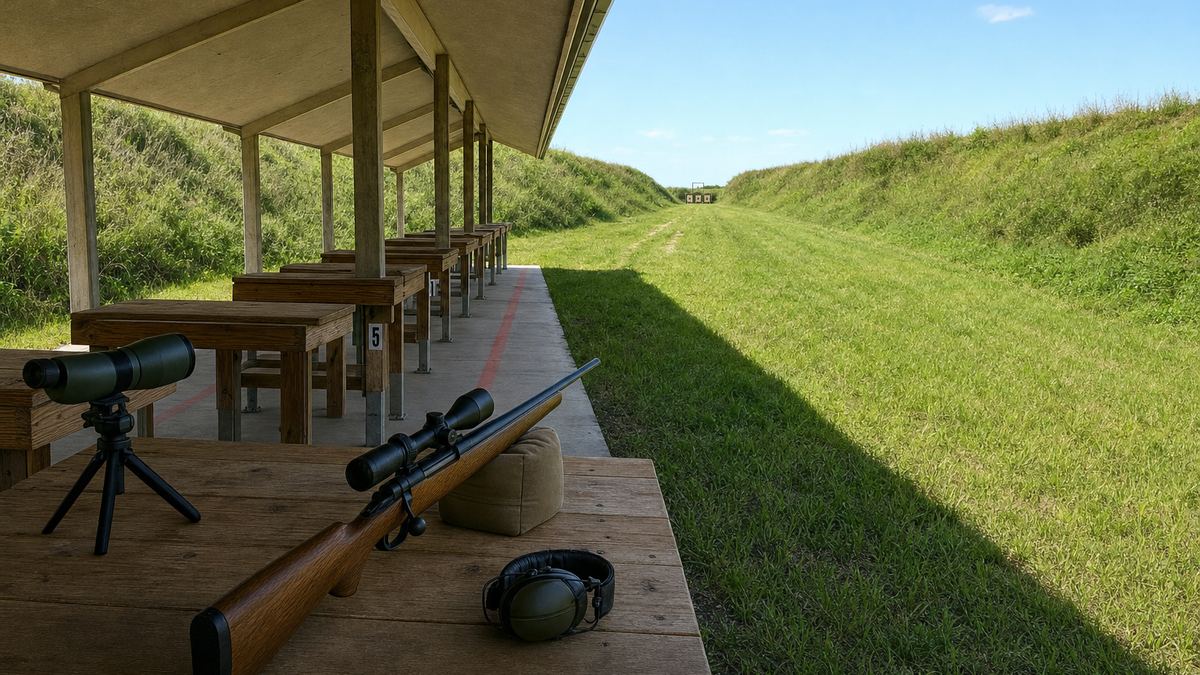
Three covered rifle firing lines face long grass ranges between high earth berms: a 20-position 100-yard range anyone can use with a day pass, and 200- and 300-yard lines with electronically scored targets for shooters who qualify.
What's here
- A 20-position 100-yard range with targets at 50 or 100 yards.
- A 20-position 200-yard range with targets at 100 or 200 yards.
- A 6-position 300-yard range.
- Electronically scored Kongsberg target systems on the 200- and 300-yard lines.
- Target frames on the 100-yard range; bring your own targets or buy them at the store.
- Range safety officers supervising every line.
Good to know
The 100-yard range is part of the $15 daily pass, which also covers both handgun ranges. The 200- and 300-yard lines cost $24.95 an hour, and you have to qualify first. When people are waiting, every rifle line runs on one-hour rotations.
Seasons & hours
The 100-yard range is included in the daily rifle and handgun pass; the long lines are billed by the hour.
Rifle range fees
| 100-yard range | $15 daily pass (includes both handgun ranges) |
| 200-yard range | $24.95 per hour |
| 300-yard range | $24.95 per hour |
Tickets & tips
- Cash and all major credit cards are accepted.
- Basic rifle rests, deluxe rests and spotting scopes are sold at the store, along with limited .223, .308 and .30-06 ammunition.
These are FWC's posted fees as of October 2026; prices can change, so check myfwc.com or call 561-512-0285 before you go.
The 100-yard range
This is where most rifle shooters start. Its 20 covered positions shoot at frames set at 50 or 100 yards, and it takes muzzleloaders, rimfire rifles and centerfire rifles up to .338 Lapua Magnum. It's a good place to sight in a hunting rifle before the season or to let a new shooter get comfortable with a .22.
Targets have to be approved by the range master. Targets with human features and zombie targets aren't allowed. Non-adhesive paper targets go up with tape, not staples or thumbtacks, so bring a roll or buy adhesive targets at the store.
Qualifying for 200 and 300 yards
The long lines are open to shooters who can show they'll keep their rounds on the target. You qualify either by showing an NRA rifle classification card, from Marksman up to High Master, or by firing 5 shots at 100 yards and keeping all of them inside the scoring rings of a standard NRA target.
Both lines take centerfire rifles up to .338 Lapua Magnum. The 200-yard range has 20 positions with targets at 100 or 200 yards; the 300-yard range has 6 positions, so it can fill on busy weekend mornings.
Electronic targets
The 200- and 300-yard lines use Kongsberg electronic target systems, which score each shot automatically, so you don't have to walk downrange or squint through a spotting scope to see where you hit. That makes these lines popular with long-range and precision shooters working on their groups and their dope.
The two-strike rule
Hitting a target frame or the overhead baffles gets a warning. A second violation ends your rifle and handgun shooting for the day. On the long lines you then have to requalify on your next visit; on the 100-yard range you have to complete a basic marksmanship training class before you can use the rifle or handgun ranges again.
Tips for a rifle visit
Arrive at opening on weekends, especially if you want the 300-yard line. Bring your NRA classification card if you have one, so you can skip the qualifying string. Pack tape, a staple-free target plan and extra targets. Eye and ear protection are required on every range; the store sells both. Florida sun is strong even under the covered line, so bring water.
See the rest of the park
Rifle Ranges is one of 6 featured areas at Palm Beach Shooting Sports Park.